BLOG
5 Reasons to Ski Cortina in Winter
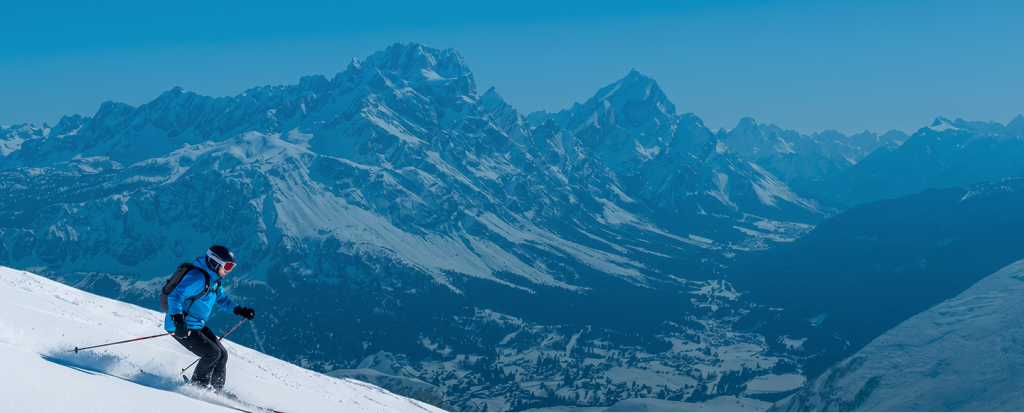
Cortina d’Ampezzo holds a special place in the world of alpine skiing. Nestled in the heart of the Dolomites, a UNESCO World Heritage Site, the Queen of the Dolomites combines a technical ski area, a unique Olympic heritage, and an elegance that sets it apart from most other Italian resorts. Here are five reasons to choose Cortina for your next ski trip.
1. An exceptional ski area, connected to the world’s largest network
The Cortina d’Ampezzo ski area offers around 120 kilometers of slopes, spread across three main sectors: Tofana, Faloria-Cristallo, and Lagazuoi-5 Torri. Thirty-six ski lifts serve these sectors, at altitudes ranging from 1,224 to 2,930 meters.
Cortina’s greatest asset, however, lies in its connection to the Dolomiti Superski network, the largest linked ski area in the world. A single pass grants access to twelve ski areas and more than 1,200 kilometers of connected slopes. Skiing in Cortina therefore means enjoying a complete local ski area while keeping the option of reaching neighboring valleys such as Alta Badia within just a few lifts. This connection has been further strengthened in recent years, with free transport consolidated in 2024 and a complete lift connection planned ahead of the 2026 Winter Olympics.
Snow reliability also remains a strong point of the ski area: 343 snow cannons allow 95% of the slopes to be covered with artificial snow, guaranteeing reliable skiing conditions throughout the season, even when natural snowfall is scarce.
2. An Olympic legacy, from 1956 to 2026
Few resorts can claim such an Olympic record. Cortina d’Ampezzo hosted Italy’s first Winter Olympic Games in 1956, and is set to host them again in 2026, alongside Milan. Seventy years separate these two editions, a gap that reflects the resort’s unique place in the history of international alpine skiing.
The symbol of this legacy remains the Olimpia delle Tofane run, opened in 1956 on the slopes of Tofana di Mezzo. This technical downhill course, 2.26 kilometers long with a vertical drop of 760 meters and a maximum gradient of 33 degrees, continues to host a Women’s Alpine Ski World Cup stage every year. Skiing this legendary run means following in the footsteps of the greatest alpine skiing champions, on a course that has witnessed seven decades of international competition.
3. Varied sectors, suited to every skiing level
One of Cortina’s great strengths lies in the diversity of its three sectors, each with its own identity and its own type of skier. The Tofana sector, the largest and most renowned, concentrates the most demanding slopes and regularly hosts international competitions. It reaches an altitude of 2,742 meters, guaranteeing spectacular panoramas across the entire Ampezzo basin.
The Faloria-Cristallo sector, located on the other side of town, stands out for its sun-drenched slopes and technical descents, particularly popular among intermediate skiers. Finally, the Lagazuoi-5 Torri sector, gentler in nature, suits beginners and intermediate skiers looking for open panoramas over the Dolomite peaks. This sector also carries the memory of the First World War, with views stretching as far as the Marmolada and Civetta.
This organization into three distinct zones allows every skier, regardless of level, to build a tailor-made day on the slopes, without ever running out of terrain to discover.
4. A panorama listed as a UNESCO World Heritage Site
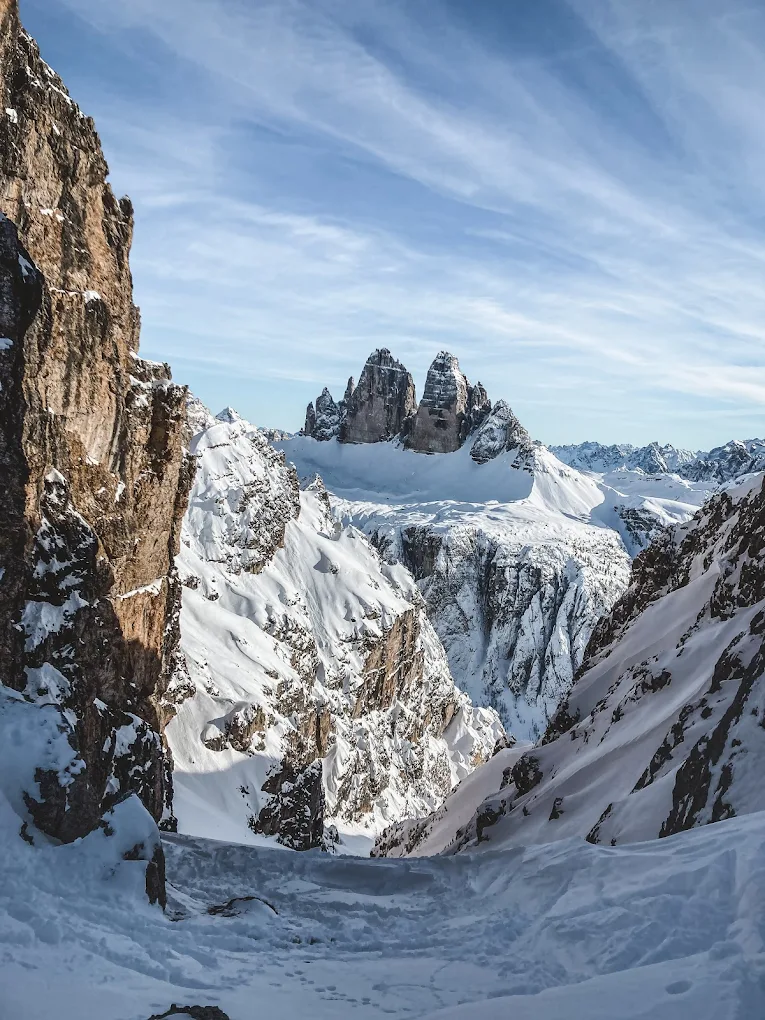
Skiing in Cortina also means moving through a landscape of internationally recognized value. The Dolomites have been inscribed on the UNESCO World Heritage List since 2009. This recognition rewards a unique mountain landscape, where the slopes wind between vertiginous limestone walls, coniferous forests, and peaks that often exceed 3,000 meters.
This exceptional setting accompanies every descent, whichever sector you choose. From Monte Cristallo and Faloria, skiers enjoy open views over the entire town and valley. The Lagazuoi cable car, which climbs steeply along the rock face up to 2,778 meters, offers one of the most spectacular panoramas in the entire ski area. Few ski resorts in Europe offer such a striking contrast between the technicality of the slopes and the beauty of the surrounding scenery.
5. An elegant mountain town, between sport and lifestyle
Cortina d’Ampezzo is not limited to its ski area. The town itself carries a charm that has been recognized for more than a century, inherited from its history as a former aristocratic retreat. Corso Italia, the long pedestrian street lined with chalets, galleries, and cafés, forms the beating heart of the resort in winter.
After a day on the slopes, the town offers a wide choice of places where sport, gastronomy, and wellness come together, right at the foot of the cliffs overlooking the valley. The winter season also shapes local life through several notable events: the Women’s Alpine Ski World Cup stage on the Olimpia delle Tofane in January, the night Snowboard World Cup on Faloria in December, and the Granfondo Dobbiaco-Cortina in February.
This combination of top-level sport and lifestyle gives Cortina a rare identity among ski resorts. Visitors come to ski legendary slopes, but they stay for the distinctive atmosphere of a town that has managed to preserve its elegance while opening its doors, every winter, to mountain lovers from around the world.
Planning your ski trip to Cortina
Between a technical and varied ski area, a UNESCO-listed panorama, and a unique Olympic heritage, Cortina d’Ampezzo brings together all the ingredients of a memorable ski trip. Whether you’re looking for demanding descents in the footsteps of champions or gentler slopes for skiing as a family, the diversity of the sectors means everyone can find their place on this ski area.
To make the most of your stay, feel free to contact us for advice on the sectors best suited to your level, and to arrange your equipment rental under the best conditions.