BLOG
5 Reasons to Discover Cortina in Summer
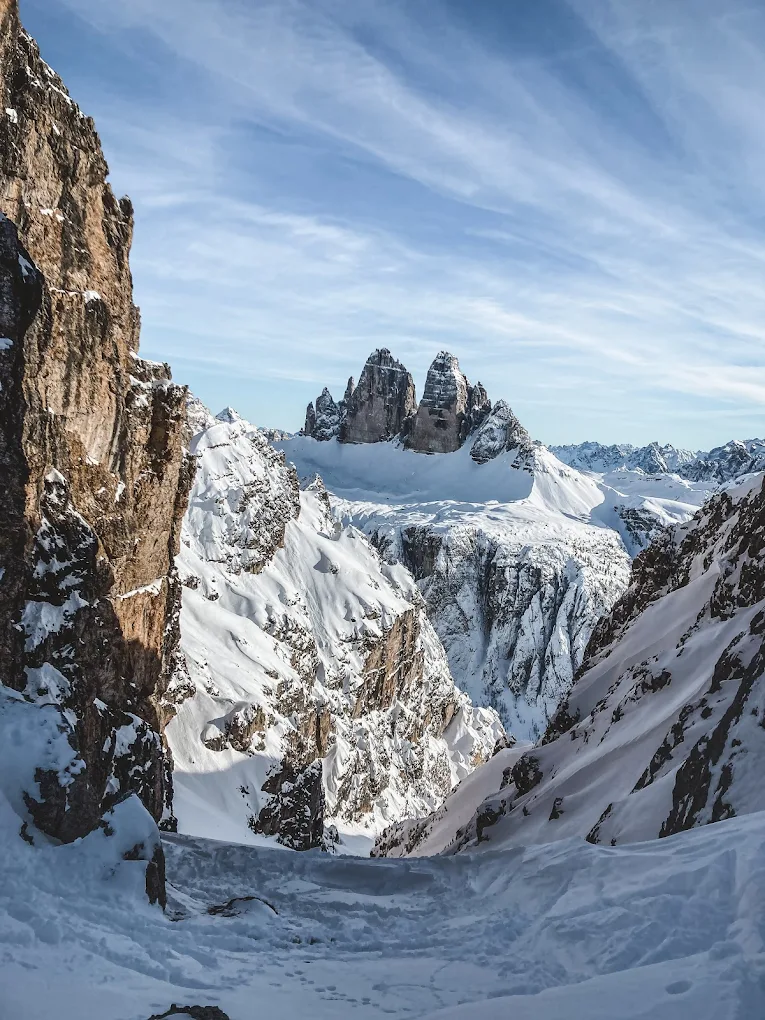
Cortina d’Ampezzo naturally brings to mind snow, ski slopes, and the excitement of winter. Yet the summer season reveals a completely different side of the Queen of the Dolomites, just as spectacular and often less well known. Between high-altitude hikes, legendary via ferratas, turquoise lakes, and a UNESCO World Heritage landscape, summer in Cortina fully deserves a place on your mountain travel calendar. Here are five reasons to come and discover it as soon as the warm season arrives.
1. A natural heritage site recognized by UNESCO
Cortina d’Ampezzo sits at the heart of the Dolomites, a mountain range inscribed on the UNESCO World Heritage List since 26 June 2009. This recognition rewards the exceptional geological value of these mountains, shaped by millions of years of erosion and tectonic movement, and recognized as a major site for earth science studies since the 18th century.
The town itself lies in a circular basin surrounded by iconic peaks: the Tofane, Cristallo, Sorapiss, Faloria, and, a little further away, the famous Tre Cime di Lavaredo. This scenery, known locally as the enrosadira when the rock turns pink and orange at sunrise and sunset, creates an atmosphere that has earned Cortina its nickname, the Queen of the Dolomites.
Visiting in summer allows you to fully enjoy this landscape without the constraints of winter gear. The longer, softer summer light highlights the limestone walls and green alpine pastures, creating a striking contrast with peaks that are sometimes still capped with snow.
2. An immense playground for hiking and trekking
Every summer, Cortina d’Ampezzo turns into a genuine open-air training ground for hiking and mountain enthusiasts. The region offers more than 400 kilometers of marked trails dedicated to hiking, trekking, and Nordic walking. The AllTrails platform alone lists 284 routes around the town, suited to all levels, from family-friendly walks to multi-day treks.
Among the most popular hikes, the trail leading to the Fanes waterfalls ranks among the most striking experiences in the region. It starts at Pian de Loa and takes walkers through deep canyons to impressive waterfalls. Another must-see, Lake Sorapiss, captivates hikers of all ages with its deep blue waters, particularly appreciated during the summer months when temperatures are milder.
Along the trails, numerous mountain huts, sheepfolds, and chalets welcome hikers for a warm break, whether for an overnight stay at altitude or simply a traditional meal after several hours of walking. Spending a night at a hut such as Rifugio Faloria, which sees few visitors in summer, offers a breathtaking view over the valley, far from the bustle of the town center.
3. Mountain biking routes for every level
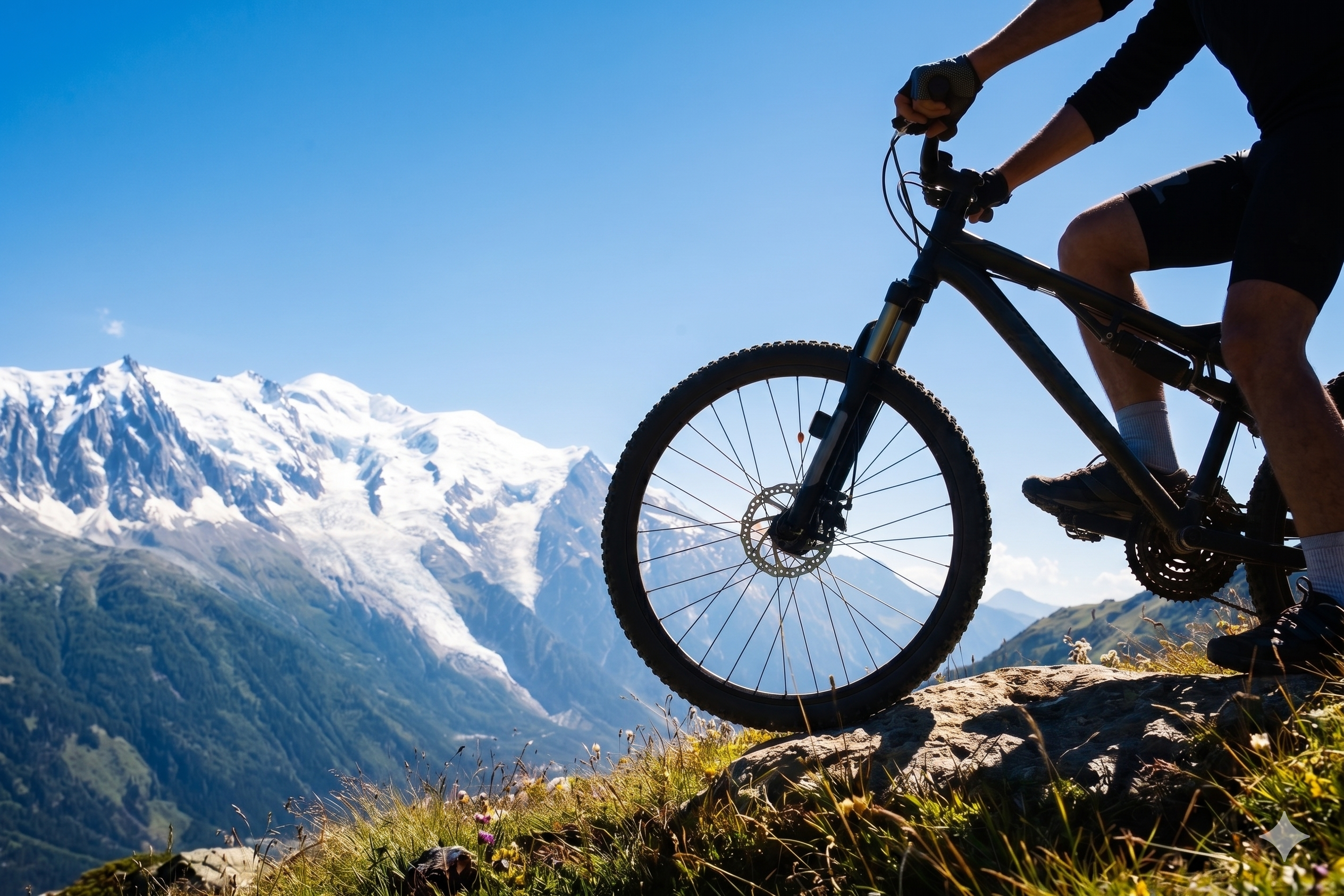
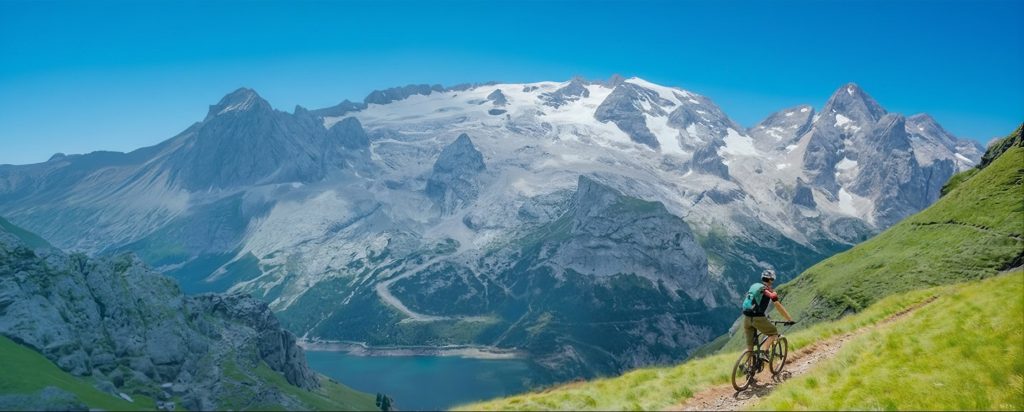
Cortina d’Ampezzo also attracts a growing number of mountain bike and e-bike enthusiasts. The marked trails cover the entire surrounding massif and suit both beginner cyclists and experienced riders seeking elevation gain and thrills. One of the most complete routes connects Cortina to Lake Misurina and Lake Antorno, before reaching the Auronzo mountain hut, perched at 2,326 meters.
This kind of route illustrates the diversity of terrain accessible around Cortina: smooth regional roads, technical forest trails, or long high-altitude crossings through almost lunar landscapes. The Lagazuoi area, in particular, combines mountain bike routes and hiking trails of great historical value, inherited from the First World War, with demanding routes crossing spectacular high-altitude panoramas.
Whether you’re planning a gentle family ride or a technical multi-day outing, the variety of terrain around Cortina lets you build a tailor-made stay, balancing physical effort with landscape contemplation.
4. Climbing and via ferrata on legendary rock faces
Vertical adventure enthusiasts find in Cortina a playground worthy of its reputation. The Tofane massif concentrates several of the best-known via ferratas in the Dolomites, offering routes of varying length and difficulty, suited both to occasional climbers and experienced mountaineers.
Two routes stand out in particular: the Punta Anna via ferrata, which leads to the summit of Tofana di Mezzo, and the Lipella via ferrata, which reaches Tofana di Rozes. Contrary to what one might imagine, limited hiking experience combined with suitable equipment is often enough to take on these routes and experience the thrill of verticality among the pinnacles and rock towers.
For more experienced climbers, the Cinque Torri remain a benchmark, along with the many sport climbing routes scattered around the Ampezzo basin. The combination of spectacular scenery and a wide range of difficulty levels makes Cortina an internationally recognized destination for summer climbing.
5. A historic, Olympic town full of character
Beyond its natural setting, Cortina d’Ampezzo has a strong identity, shaped by a rich history and a distinctive place on the international sporting stage. The town, home today to around 5,800 permanent residents and more than 200 shops and restaurants, hosted the Winter Olympic Games as early as 1956, and will host them again in 2026 alongside Milan.
Its architecture still bears the mark of several centuries of mixed influences, notably Austro-Hungarian, visible in the colorful façades along Corso Italia, the main street lined with elegant shops. Since the 19th century, the town has attracted first explorers and scientists, then aristocrats and royal families, before becoming Italian at the end of the First World War. This gradual evolution built the reputation for exclusivity and refinement that Cortina retains today, without ever losing its mountain character.
Walking through the streets of Cortina in summer, among lively terraces and elegant shop windows, offers a very different pace of life from the high winter season. The town remains lively and welcoming, while offering a more relaxed atmosphere, ideal for a quiet discovery of local heritage and mountain cuisine.
Planning your summer stay in Cortina
These five reasons only scratch the surface of everything Cortina d’Ampezzo has to offer during the summer season. Hiking, mountain biking, via ferrata, heritage, and a relaxed way of life combine to offer a stay as rich as the one experienced on the slopes in winter, with the added benefit of longer days and a pace suited to the whole family.
To make the most of these activities, it’s best to set out well equipped and well informed about the difficulty level of the trails you choose. Our team remains available to advise you on routes suited to your ability and to answer any questions about your stay in Cortina. Feel free to contact us before your arrival to plan your itinerary under the best conditions.